Reflections on technology, society and human potential
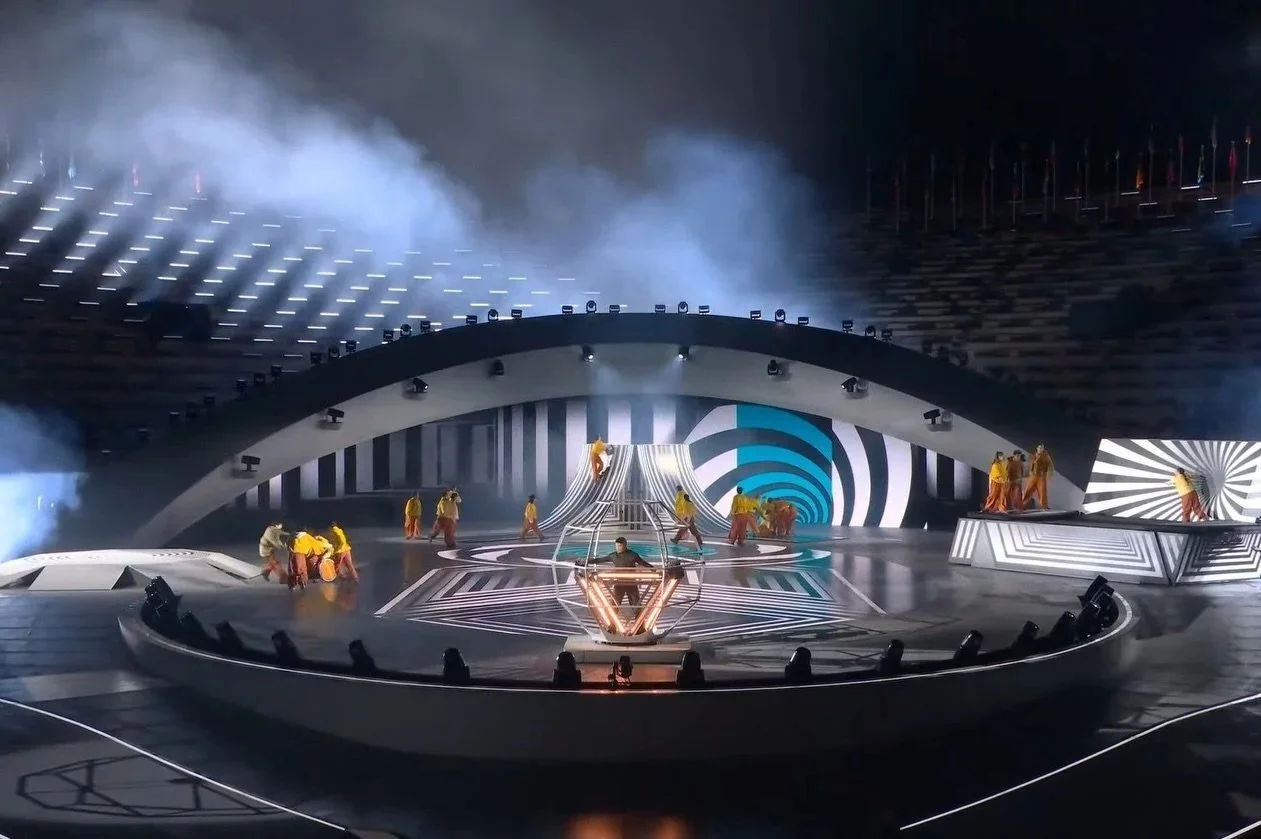
A powerful moment from the opening ceremony of the Milano Cortina 2026 Paralympic Winter Games. Image: Dardust — official Facebook page.
I have always loved the Olympic spirit — people from all over the world brought together by passion, discipline, and years of preparation. Opening ceremonies are often pure magic. Yet the opening ceremony of the Milano Cortina 2026 Paralympic Winter Games moved me in a way I did not expect. Something about it stayed with me long after the event ended.
Among the artistic performances centered on the theme Life in Motion there was a segment accompanied by the music of Dardust. The stage design played with perspective and visual illusion, and it caught my attention. At first glance, the shapes and lines on the stage looked like barriers. As the performance unfolded, they slowly revealed themselves as spaces the performers could reshape and navigate together. What first looked like obstacles became part of the choreography itself. It was visually simple, but powerful.
Watching it, I found myself thinking about the way we experience the world around us. For many of us, the environments we move through every day simply work. Doors open. Stairs are manageable. Spaces feel natural and intuitive. We rarely stop to think about how much design is embedded in everyday life. For others, though, the same spaces can quickly become a landscape of invisible obstacles. Not because of a lack of strength or determination, but because many environments are still designed with only one type of body in mind.
This is where innovation reveals its deeper role — not as spectacle, but as a bridge between bodies, environments and possibilities. The Paralympic athletes are perhaps the clearest proof. Behind every prosthetic limb, adaptive ski, racing wheelchair or assistive technology lie years of research, engineering and medical knowledge — and the work of entire communities of scientists, engineers, doctors and designers.
The Paralympic Games make this work visible. In doing so, they remind us that innovation is not always about inventing something completely new. Sometimes it is about removing a barrier. Sometimes it is about redesigning a space, rethinking a tool, or creating technologies that allow more people to fully participate in the world around them.
What I felt most strongly in that moment was admiration — and also humility. Admiration for the athletes, of course. Their discipline, resilience and extraordinary capabilities are inspiring in their own right. But also deep respect for the quiet work of thousands of people whose research and innovation make these possibilities real. People who dedicate their careers to improving how humans interact with technology, environments and each other.
Moments like these remind us that what we call “disability” often emerges at the intersection between a body and an environment that was not designed with that body in mind. This tension highlights why innovation fundamentally needs culture—technological systems only truly succeed when they are deeply aligned with the living habits and social frameworks of the humans using them.
When design changes, possibilities change. Meaningful innovation is not about making everyone the same. It is about expanding the spectrum of possibilities so that more people can live their lives fully. Cultivating this requires a deep commitment to design intentionality within the human collective, ensuring our creators look beyond basic metrics to serve human dignity. And sometimes, when research, creativity and technology come together with that purpose, something remarkable happens. They become a bridge.
They become a bridge.
