How artificial intelligence is redefining the value of human work, expertise and judgment.
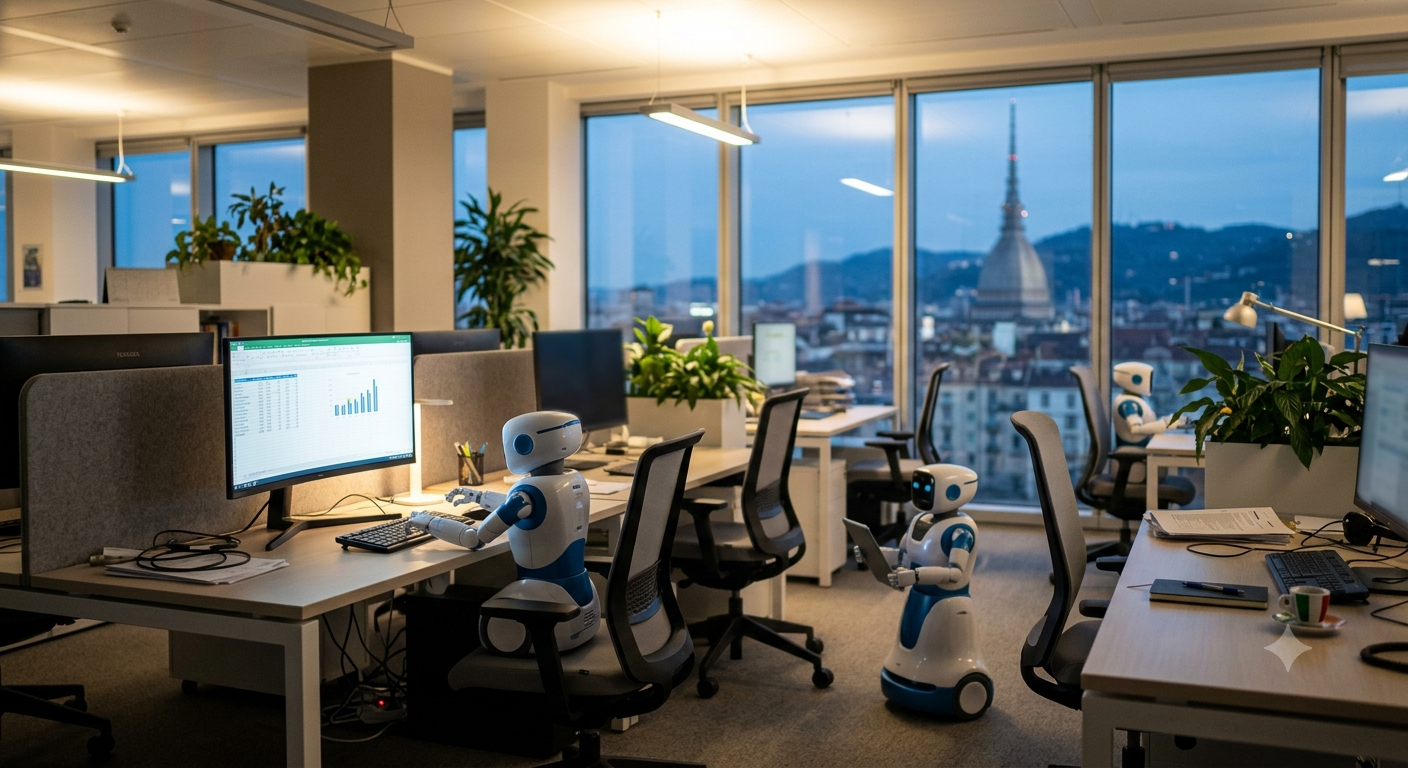
When AI replaces the workforce, are we streamlining execution—or quietly replacing human experience and judgment? - - Image generate with Gemini
How AI Is Changing the Way We Work
Innovation has always fascinated me.
After more than twenty years in international marketing—building brands across industries, navigating multilingual markets, and embracing every major digital transformation that reshaped our profession—I have never feared technology. Quite the opposite. Technology has always been an amplifier. It expands human imagination, compresses distance, and allows us to solve problems that only a few years earlier seemed impossible.
Artificial intelligence is no exception. To me, it represents one of humanity's greatest technological achievements—one we are still building and only beginning to understand. I trust it will create opportunities we cannot yet imagine. Yet the speed at which it is redefining the value of human work—and perhaps even our understanding of human contribution—is unprecedented.
A year ago, I lost my job.
I was replaced by a junior colleague—and by AI.
That experience forced me to ask a question that reaches far beyond my own career: If AI can perform many of my daily tasks, what exactly were companies paying for all these years?
How AI Is Redefining Professional Value
This isn't another article about AI taking jobs.
It is about something far more fundamental. It is about how we define human value.
For decades, organizations told us they hired people for their judgment, strategic thinking, creativity, and emotional intelligence. We were encouraged to think differently, collaborate across cultures, and continuously learn. HR departments filled office walls with slogans celebrating diversity, inclusion and the unique contribution every individual could bring.
Yet today's economic logic increasingly asks a different question: Who can deliver acceptable results faster and at lower cost?
That subtle shift changes everything.
Perhaps AI isn't transforming work as much as it is exposing how we've already chosen to define it. If a profession can be reduced to a sequence of repeatable tasks, automation becomes inevitable.
The unsettling realization isn't that AI can execute those tasks. It's that many organizations may have forgotten the difference between executing tasks and exercising judgment.
What the AI Job Market Data Really Tells Us
There is no shortage of headlines about AI replacing jobs.
Platforms like AI Layoffs have already tracked more than 425,000 jobs affected directly or indirectly by AI, while roughly 284,000 new AI-focused roles have emerged. On paper, this looks like every technological transition before it: old jobs disappear, new ones are created, productivity increases.
The scale is difficult to ignore: roughly one in four jobs worldwide—and one in three in advanced economies—are already exposed to AI-driven automation.
The numbers measure the shift. They don't capture what it feels like to live through it. Every technological revolution creates winners, losers and new opportunities, but living through the transition is rarely painless.
Companies rarely announce, "We're replacing twenty years of expertise.” Instead, they freeze hiring, merge departments, flatten organizational structures and call it optimization, digital transformation or efficiency.
Sometimes those terms accurately describe innovation.
Sometimes they simply describe doing more with fewer people.
In doing so, organizations risk confusing execution speed with strategic direction, trading deep domain knowledge, cultural nuance, and long-term thinking for the sheer velocity of generation.
AI Agents as Digital Employees
This evolution is becoming visible not only in hiring practices, but in the software itself. Companies like Caestro no longer sell software; they sell employees. AI agents now come with job descriptions, organizational roles and even probationary periods supervised by human managers. That's an extraordinary shift.
Even more striking is the promise of compounding institutional memory. Every correction made by a human manager permanently improves the system, creating organizational knowledge that future agents inherit. Software is no longer being sold as a tool. It is being marketed as headcount.
It raises a question I can’t stop thinking about: When a senior professional leaves and a junior employee orchestrates a team of AI agents instead, what exactly has been replaced?
The tasks? Certainly. But was the job ever just a collection of tasks? I don't believe it was.
The real value of expertise was never the ability to produce more output. It was the ability to make better decisions.
Experience is not accumulated information. It is accumulated judgment. It is knowing which campaign not to launch. Which partnership will quietly fail. Why the same message will resonate differently in Milan, Detroit and Beijing, even when every word is identical.
Those insights cannot simply be prompted into existence. They are earned.
What Humans Will Still Do Better Than AI
Perhaps this is AI's greatest paradox.
The more capable machines become at generating content, the more valuable human discernment becomes. Speed without direction simply gets us lost faster.
When almost anyone can produce competent text, images or strategies in seconds, competence is no longer scarce.
Direction becomes scarce.
Judgment becomes scarce.
Taste becomes scarce.
Trust becomes scarce.
This is where Dan Koe's reflections resonate deeply. He argues that AI itself isn’t the greatest threat. It is that dependence on traditional institutions has become increasingly fragile. Titles, tenure and institutional loyalty are becoming weaker forms of security as the cost of execution approaches zero. Companies will continue adopting AI because the economic incentives are overwhelming. Governments will continue regulating around it. Resisting the technology changes very little.
Dan suggests that individuals should invest in qualities that are difficult to automate. People with the agency to create opportunities rather than wait for them. The taste to recognize what is genuinely valuable. The ability to persuade, tell stories and make others care. And the willingness to learn continuously, adapting faster than any formal career path can prescribe.
Whether one agrees with him or not, his conclusion is difficult to ignore: the safest career may no longer be the one most deeply embedded within an institution, but the one built on uniquely human capabilities that technology cannot easily standardize.
In a world flooded with generated content, perspective becomes more valuable than production. Meaning outlasts efficiency.
The future won't belong to those who know how to use AI. It will belong to those who know what to ask of it—and why.
What AI Cannot Automate
I don't worry that AI will replace humanity.
I worry that, in our understandable pursuit of efficiency, we may forget what human expertise was actually for. The value of an experienced professional was never measured by the number of emails they could write or presentations they could produce.
It was their ability to navigate ambiguity.
Challenge assumptions.
Connect ideas that didn't appear connected.
Recognize patterns invisible to less experienced eyes.
Make decisions whose consequences unfold years later.
Those qualities are difficult to measure. Which makes them dangerously easy to undervalue.
This transformation is not a crisis of technology. It is a test of judgment.
AI will continue becoming faster, cheaper and more capable. It should.
As we build increasingly capable models and welcome virtual colleagues into our organizations, we should be careful not to hollow out the mentorship, wisdom and judgment that made those organizations successful in the first place.
I don't believe companies create lasting value by replacing people with software. They succeed by enabling people to make better decisions.
Perhaps that is the real question AI is forcing us to confront.
Not whether machines can think like humans.
But whether humans still remember what only humans can contribute.
