Why Humanoid Robots Feel Emotionally Real
Inside the Loneliness Economy: from elderly care to spiritual settings, how automated presence is filling the gaps in our social infrastructure.
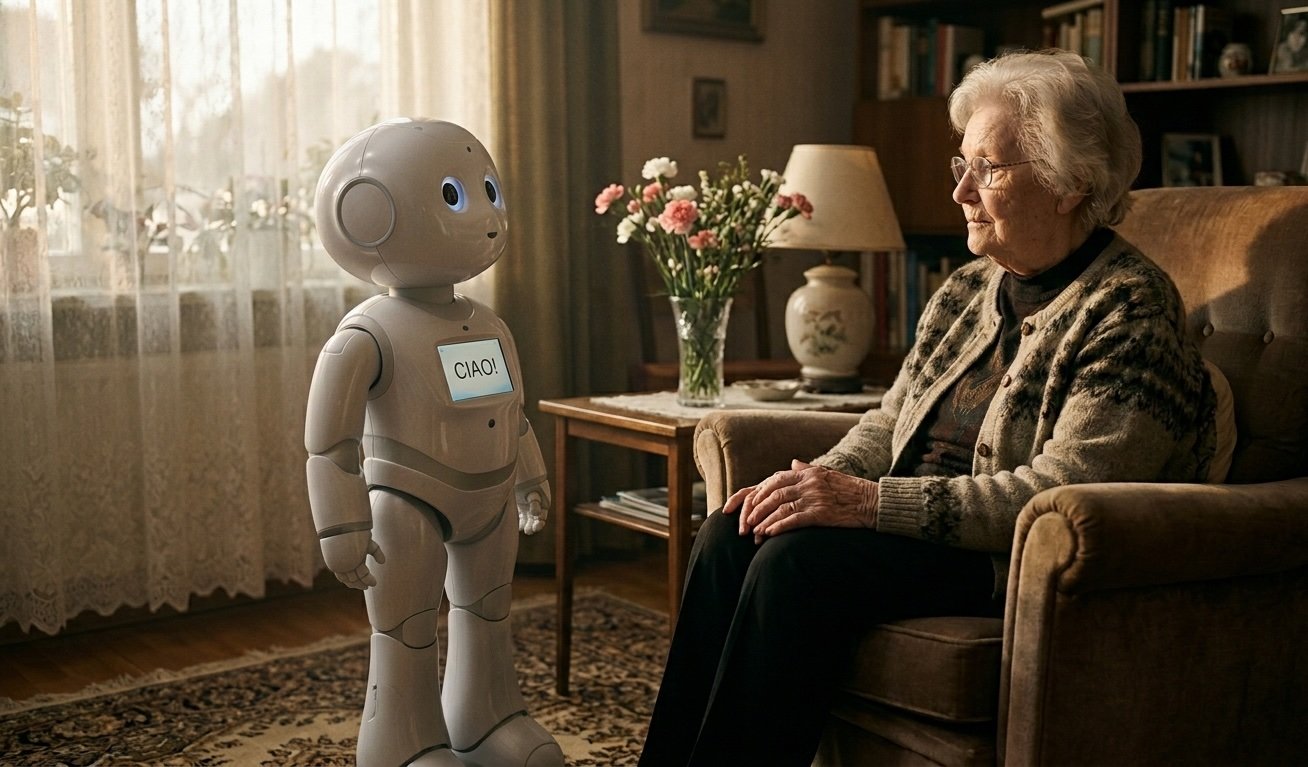
When a machine steps into our physical architecture and greets us, our biology effortlessly fills the silence with emotional projection.
Breaking the Glass Screen: How Humanoid AI Redefines Presence
For years, artificial intelligence lived behind glass. We interacted with machines through chat windows, blinking cursors, and voice assistants trapped inside speakers. Even when conversational AI became impressively human-like, we still understood it as software — language without a body.
Humanoid robots change that equation completely.
When a machine stands at eye level, mirrors our movements, adjusts its posture, or pauses as we speak, the interaction stops feeling computational. It becomes social. A humanoid robot does not simply process language; it occupies physical space beside us. And human psychology is extraordinarily sensitive to presence.
This is why humanoid robotics triggers reactions far deeper than ordinary automation anxiety. The issue is no longer intelligence alone. It is embodiment.
The Psychology of Embodiment: Why We Bond With Humanoid Robots
The human brain evolved under a simple rule: if something moves like us, reacts to us, and shares space with us, it is socially real.
We instinctively assign intention and emotion to responsive behavior. People name robotic vacuum cleaners, apologize to chatbots, and mourn digital pets they consciously know are artificial. Humanoid robots intensify this instinct dramatically because they activate the same social wiring we use for interacting with other humans.
A conversational AI exists inside language. A humanoid exists inside architecture.
It walks into rooms. It turns toward us. It waits. It gestures.
And our brains respond automatically.
This explains why humanoid robots feel fundamentally different from software. They are not merely interfaces we use, but presences we experience.
The Loneliness Economy: Humanoids in Eldercare and Social Infrastructure
As humanoid systems improve, they are rapidly moving beyond factories into emotionally sensitive environments: eldercare, hospitality, education, and companionship.
This shift is not accidental.
Many industrialized societies are experiencing severe caregiver shortages, aging populations, and rising social isolation. In countries like Japan and South Korea, humanoid assistants are increasingly viewed not simply as labor-saving tools, but as social infrastructure designed to stabilize overstretched systems of care.
The machines entering these spaces are not replacing only physical work. They are beginning to replace emotional availability itself.
One of the most striking examples is Mindar, the humanoid robot preacher developed for Kyoto’s Kōdai-ji Temple. Standing before visitors with a silicone face and mechanical body, the robot delivers Buddhist teachings on compassion and suffering.
The image feels surreal. Yet it reveals something important: humans do not require consciousness to experience social connection. We require responsiveness.
The Cultural Divide: Western Automation Anxiety vs. Eastern Animism
Interestingly, reactions to humanoid robots vary sharply across cultures.
In much of Western culture, artificial humans are framed through dystopian narratives: Frankenstein, Terminator, the fear of technological rebellion and replacement. The humanoid body becomes a symbol of existential competition.
Japan developed a remarkably different mythology. Influenced by Shinto traditions, where spiritual presence can inhabit both living and non-living things, Japanese culture has historically portrayed robots less as threats than as companions or helpers. Characters like Astro Boy were not warnings about artificial life, but optimistic visions of coexistence between humans and machines.
Where the West often sees replacement, East Asia more frequently sees assistance.
Yet beneath these cultural differences lies a universal psychological truth: humans are biologically vulnerable to responsiveness itself.
Japan's buddhist robot preacher. Retrieved: DW Stories/YouTube
The Ethics of Industrialized Presence: Subscription-Based Companionship
This is the deeper ethical shift emerging beneath humanoid robotics.
The danger is not necessarily that machines become conscious. It is that humans are remarkably easy to emotionally attach to.
A humanoid robot does not need genuine empathy to produce the sensation of being cared for. It only needs to simulate attentiveness convincingly enough for the nervous system to respond.
That creates an entirely new economic frontier: the monetization of emotional presence.
For decades, the technology industry monetized information and attention. Humanoid AI may monetize companionship itself.
And once emotional attachment becomes infrastructure, difficult questions follow. What happens when empathy becomes subscription-based? What happens when corporations own the personalities people are emotionally dependent on? What happens when loneliness becomes a scalable market opportunity?
Perhaps the most unsettling realization is that emotional attachment does not require consciousness on the other side. It only requires the feeling of being acknowledged.
The future of humanoid robotics may ultimately have less to do with artificial intelligence than with human psychology itself. These machines are not merely entering factories or homes. They are entering the emotional grammar through which humans experience presence, care, and connection.
The true disruption ahead is not mechanical.
It is social.
